
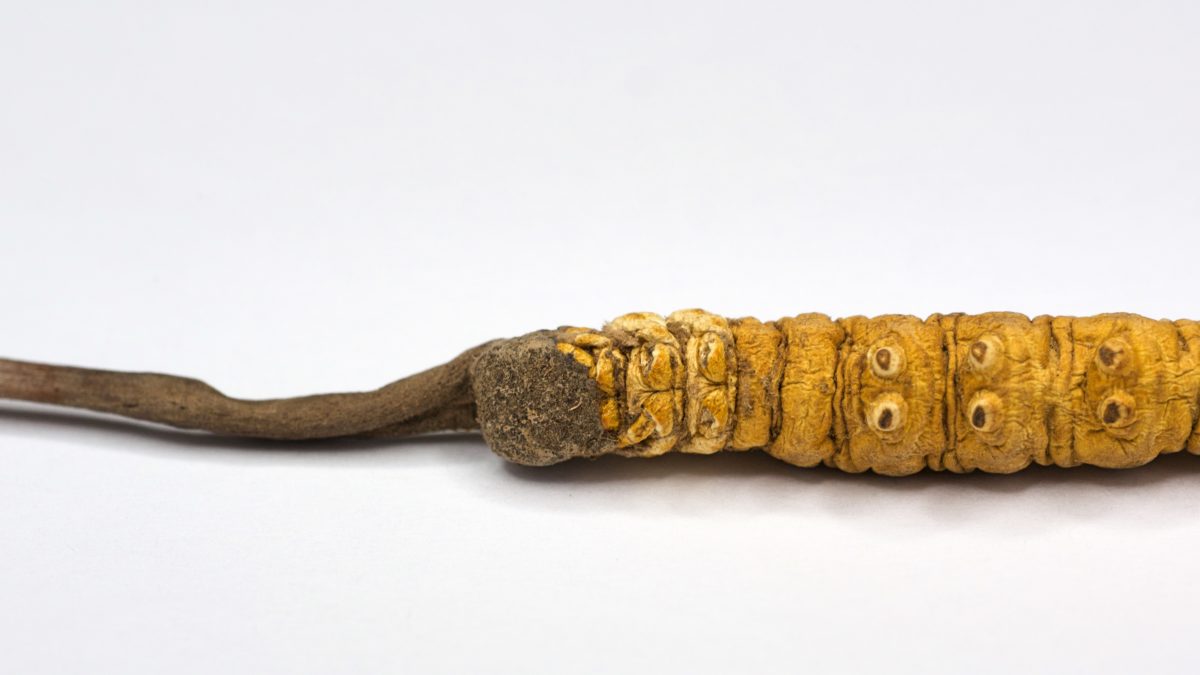
How the Cordyceps Fungus Gives You More Energy
Before reading this article, please be aware that it is also available as a video presentation. If the video format is your preferred way to digest information, you can watch the video below. Otherwise, read on…
Foreword
There are actually hundreds of different species of the Cordyceps fungus, but when we’re talking about the potential health benefits, we’re usually referring to either C. sinensis or C. militaris. These varieties are both adaptogenic and can modulate immune function, and they also possess a lot of antioxidant and anti-inflammatory benefits too, which can be particularly useful when treating cardiovascular diseases, as well as certain types of cancer.
Cordyceps can also increase the absorption and utility of oxygen within the body which makes it great for respiratory conditions and for cognitive function, but out of everything that Cordyceps has to offer, the thing that it is best known for (aside from The Last of Us) is its ability to increase energy and stamina. These performance enhancing properties are the main reason that Cordyceps has become so popular as a supplement.
Cordyceps ~ A Perfectly Balanced Adaptogen

The traditional understanding according to both Chinese and Tibetan medicine, is that Cordyceps possesses both yin and yang qualities – it is both energizing and restorative, and because of this, it has always been categorized as a medicine that balances vitality – the vitality of both the body and the mind.
Premium quality Cordyceps can have a significant effect on our energy levels – on our ability to generate energy for extended periods of time, and also to recover more quickly and more efficiently after exercise. The way that Cordyceps impacts energy metabolism actually has a lot more to do with its role as an adaptogen, and the way that it works is really impressive. So from a purely scientific standpoint, how exactly does the Cordyceps fungus give you more energy?

Well, before we can answer that question we need to take a brief physiological detour, which is going to provide some very important context; Cordyceps actually has a pretty systemic influence over every stage of cellular energy metabolism, so understanding this a bit better will give us some insight into how Cordyceps actually works and also the kind of things we need to be looking for in a Cordyceps product…
Adenosine Triphosphate ~ The Energy Currency of the Body
So to start with, there is a molecule in the body called adenosine triphosphate (ATP) which is widely regarded as the ‘energy currency’ of the body. Every single movement and muscle contraction, every heart beat, metabolic function and even every thought – basically everything that requires energy, is the result of ATP.
However, we shouldn’t look at ATP as a type of fuel that is burned within our cells – it’s actually more like a battery that stores energy and then releases it whenever a biological action demands it. To put it really simply, ATP is created from the food we eat and the air we breathe, and the byproducts from ATP synthesis are carbon dioxide and humidity, which is primarily why we exhale both of them.

Broadly speaking there are three main steps to ATP production:
1. Glycolysis
The first step is glycolysis, which takes place within the liquid cytoplasm of the cell, and this stage is where the nutrients we eat – in this case carbohydrates – are broken down into more simple molecules. The byproducts of glycolysis are then used to power the next phase of ATP production, which is known as the Krebs cycle.
2. The Krebs Cycle
The krebs cycle takes place within the mitochondria, which are tiny cellular organelles that are often referred to as the ‘powerhouses’ of the cell, because like an engine, the mitochondria are responsible for converting fuel into energy. So, during the krebs cycle, the nutrients produced from the glycolysis stage are exposed to oxygen in a process that’s known as ‘cellular respiration’. These nutrients become oxidized and broken down which produces two different coenzymes (NADH and FADH2) that act as ‘energy carriers’, which are required for the third and final stage.

3. The Electron Transport Chain
This final step is called the ‘electron transport chain’, which takes place within the inner membrane of the mitochondria, and as the electron transport chain is so oxygen-dependent, this stage is also part of cellular respiration. Here, the coenzymes from the krebs cycle carry electrons through a series of proteins, and as these electrons travel through this protein gradient, energy is produced and is used to pump protons back through the mitochondrial membrane in the opposite direction.
The only way for these protons to successfully complete this journey is to pass directly through an enzyme called ATP synthase, which parcels up all of this accumulated energy into ATP molecules. The resulting ATP molecules are then used to power every physical and mental task – every biological process within the body.

So let’s summarize all of that in very simple terms: we eat, we breathe, and our cells refine the nutrients and the oxygen into ATP molecules, which are a very stable form of energy that can be stored, used, and easily recycled. This flexibility is precisely why ATP is called the ‘energy currency’ of the body.
Talking about things like cellular respiration, the krebs cycle and the electron transport chain may seem unnecessarily complicated, but this fungus has a profound influence on all three of these biochemical steps, so cultivating some awareness of these natural processes is exactly how we can develop a better understanding of how Cordyceps actually works in the body, and how it is able to give us more energy, strength and stamina.
Cordycepin ~ A Powerful Nucleoside
The Cordyceps fungus already contains adenosine which is obviously a major building block of ATP (adenosine triphosphate) but more importantly, the primary active compound in Cordyceps is a nucleoside called cordycepin which is actually a derivative of adenosine. Cordycepin possesses A LOT of pharmacological activity and is heavily researched for its medicinal properties.
One of those properties is the activation of an enzyme in the body called AMPK (5’ Adenosine-Monophosphate-Activated Protein Kinase) which plays a fundamental role in cellular energy homeostasis. So when our energy levels begin to drop, AMPK enhances the uptake of glucose into our cells, which correspondingly increases the activity of glycolysis – the first stage of ATP production.

AMPK also adjusts the metabolism of each individual cell so that oxygen is utilized more efficiently. This increases the oxidation of nutrients within the mitochondria, which optimizes both the krebs cycle and the electron transport chain – the second and third stages of ATP production.
When the AMPK enzyme becomes activated by cordycepin, it also stimulates the activity of a gene called PGC-1a. PGC-1a is a genetic transcription factor for mitochondrial biogenesis, which means that when this gene is switched on, it physically constructs a lot more mitochondria inside every cell.
So thanks to cordycepin, the combined stages of ATP synthesis become enhanced and optimized, but they’re also multiplied many times over thanks to PGC-1a causing an exponential increase of mitochondria within every single cell. When we consider that the average cell uses approximately 10 million ATP molecules per second, this can substantially increase our capacity for cellular energy production.

With a lot more mitochondria spreading the workload, the efficiency of energy metabolism increases, meaning that once ATP has been used, it can be recycled more rapidly, which helps the liver in storing and releasing glycogen, directly increasing stamina and endurance.
In addition to that, post-workout recovery can also become quicker and more efficient, because with more mitochondria, the energy-guzzling process of clearing lactate buildup after intensive exercise is actually a lot faster, making recovery times shorter… and because lactate itself can be easily converted back into glucose, it can then be used to create yet more ATP!
Each stage of cellular energy metabolism is fully optimized under the influence of cordycepin in a feedback loop of efficiency, which demonstrates how – as an adaptogenic medicine – Cordyceps can support the body’s own endogenous processes rather than merely stimulating or suppressing them.
Using Cordyceps Products
As an adaptogen, Cordyceps can have a profound effect on energy homeostasis – it improves energy levels, strength, stamina and muscle building, and also enhances performance and recovery, but we won’t get optimal results from a single dose of Cordyceps. It is understood that the active compound cordycepin starts to gain momentum in the body after 48 – 72 hours of consistent use, and this process is cumulative, so the best results are going to come from using premium quality Cordyceps regularly, over the course of time.

This performance enhancing potential obviously makes Cordyceps very interesting to sportspeople, but optimizing ATP metabolism is also critically important for the optimal functioning of the immune, cardiovascular, neurological, respiratory and even reproductive systems. As we age beyond mid-life our innate mitochondria production and ATP synthesis both begin to decline, which results in chronic fatigue, chronic pain and the body feeling tired, sore and stiff all the time.
Cordycepin is generally recognized as a very safe, non-toxic compound so there aren’t really any strong side effects to be wary of, although there are some possible contraindications: due to Cordyceps helping to regulate blood sugar and lipids, it can interact with anticoagulants and blood sugar medications, so if somebody is using these prescription medicines they need to proceed with caution, or just avoid using Cordyceps altogether.
Which Products Are Best?
Considering all of this, which products should we buy? The truth is, quality really is the bottom line, so if we’re going to use low quality, low potency products, we should expect equally poor results. As mentioned earlier, the two most tried and tested medicinal species are C. sinensis and C. militaris.
C. sinensis products should always be made from the liquid-fermented mycelium, and products using C. militaris should always come from organically cultivated fruiting bodies. In the wild, C. militaris parasitizes silkworm larvae, so fruiting bodies that are grown on a substrate containing silkworm larvae do typically contain a higher quantity of active compounds when compared to fungi that are cultivated using vegan methods.

Even though there are hundreds of important compounds in Cordyceps, the C. militaris fruiting bodies do generally contain a higher quantity of cordycepin than the C. sinensis mycelium, although premium quality mycelium products can also be very good. There are some products that are a combination of both of these varieties, which have the potential to be excellent quality as well.
Unfortunately there are a lot of mediocre products out there that don’t deliver on their marketing promises, so if you are going to use Cordyceps for its effects on energy metabolism (or for any reason at all), just remember that any product that is genuinely good quality will specify the quantities of certain active compounds – not least cordycepin. If a Cordyceps product doesn’t state the percentage of cordycepin, then its usefulness as a medicine should immediately be called into question.
Having a rudimentary understanding of how Cordyceps works in the body is important, because a lot of people believe that Cordyceps is a stimulant and it will keep you awake if you take it in the evening, but this isn’t the case at all. Cordyceps doesn’t stimulate a sudden increase in energy levels – it optimizes our energy infrastructure – on a genetic level – so that we are better able to produce, store, use and recycle energy more efficiently. It is most definitely not a stimulant or a suppressant of metabolic processes – it is an adaptogen that improves and enhances the overall operating system.
Closing Thoughts
This fungus possesses many more therapeutic attributes besides its ability to enhance energy levels, such as modulating immune function, strengthening respiratory function and inhibiting the development of numerous different types of cancer.
Genuine quality Cordyceps is capable of supporting the resilience and healing adaptability of the body in many ways, which is something that was widely understood in traditional medicine systems for the last few centuries at least. There is now a rapidly expanding volume of scientific data and clinical trials – a lot of which is simply elaborating on the traditional benefits that were already established so long ago.
Yet in spite of this, some parts of the world are now regulating Cordyceps as a ‘novel food’ claiming that there is insufficient evidence to back up many of its health claims. This statement is categorically false due to such an extensive history of recorded use, combined with the constantly evolving quantity of scientific research. However, if the active compounds in Cordyceps could be patented by pharmaceutical companies, then its status as a novel food would surely disappear overnight.
Unfortunately this is a common predicament with natural therapeutics and is not limited to the Cordyceps fungus. In truth, any natural medicines (with recognized potency and effectiveness in treating disease) that have not (yet) had their ‘active compounds’ patented, are routinely labelled as ’novel’ items that do not have sufficient scientific evidence to support any health claims.
So on that note, below are some research links that explore how the cordycepin compound affects cellular energy metabolism:
Research Links
- Cordycepin improves fatigue caused by excessive exercise
- Cordyceps militaris promotes cellular energy production
- Cordycepin activates AMP-Activated Protein Kinase
- Cordycepin and the AMPK signaling pathway
- Cordycepin exhibits anti-fatigue effects via PGC-1a signaling pathway
- A systemic review of the biological effects of cordycepin